A transportation estimate can make a remote auction vehicle look easy to compare.
The unit is priced well, shipping appears to cost $700, and the retail spread looks stronger than anything available nearby. It is tempting to add the estimate to the expected purchase price and call the result the landed cost.
That calculation is incomplete.
Transportation is one line in the acquisition math. The real decision also includes auction fees, release costs, inspection, recon, delays, condition uncertainty, and the retail outcome the vehicle must support after it reaches the dealership.
The transportation estimate is useful. It just is not the final number.
Know What the Estimate Represents
A transportation estimate is usually based on details such as the pickup and delivery locations, route, vehicle type, current carrier activity, and recent pricing. It gives the buyer a reasonable starting point before the vehicle is purchased.
It may not be a firm quote or a guaranteed invoice.
The final cost can change based on:
- Exact pickup and delivery locations
- Vehicle size, weight, and modifications
- Whether the vehicle runs, drives, and rolls
- Open or enclosed transportation
- Carrier availability on the route
- Pickup flexibility and delivery deadline
- Season, weather, fuel prices, and regional demand
- Access restrictions at the auction or dealership
Before bidding, confirm whether the number on the listing is an estimate, a range, or a bookable rate. If the deal only works at the lowest possible transportation cost, there may not be enough room in it.
This issue is becoming more visible in wholesale sourcing. Cox Automotive recently added Central Dispatch transportation estimates to Manheim and Stockwave so dealers can see shipping information while evaluating inventory. According to the company's announcement, online Manheim and OVE buyers source vehicles from more than 400 miles away on average. That makes transportation an important pre-bid input, but it does not replace the rest of the acquisition math. Read the Cox Automotive announcement.
Start With the Retail Exit
Do not begin with the auction price and ask whether the vehicle still has room after shipping. Begin with a supportable retail outcome and work backward.
Before setting the maximum bid, establish:
- A realistic retail price range
- The vehicle's position against local competition
- Expected days to sale
- Your target gross
- A reasonable wholesale fallback
Live Local Market can help identify comparable retail listings near the dealership. Market Tracker adds regional supply, demand, sales, and dealer-performance context. Together, they help answer the first question in a remote purchase: does this vehicle have a credible retail exit in the market where it will actually be sold?
Once the retail range and target gross are established, every acquisition cost reduces the amount available for the bid.
Build the Complete Pre-Bid Cost
A practical remote-purchase calculation should include the following categories.
Purchase price
This is the hammer price or accepted offer. It is the most visible number, but it is only the beginning.
Auction and transaction fees
Use the fee schedule for the specific auction, buyer account, sale type, and purchase price. Include online transaction fees, payment charges, or other costs that apply to the channel.
Do not rely on the fee from the last vehicle you purchased. A different price band, auction, or digital platform can change the total.
Transportation
Use the best current estimate available and record the assumptions behind it. If the estimate is a range, the bid should not depend on the lowest number without a good reason.
Include any separate costs for an inoperable vehicle, oversized tires, a lifted suspension, expedited pickup, remote delivery, or other circumstances that could make the move more expensive.
Release, gate, and storage costs
Auction storage can begin before a carrier is available. Some locations may also have gate, release, loading, or access requirements that affect the move.
Check how long the vehicle can remain at the location without charge and how quickly the transporter is likely to collect it. A low shipping estimate can lose its advantage if storage starts accumulating while the vehicle waits.
Inspection and condition verification
A remote vehicle may require a post-sale inspection, third-party inspection, diagnostic scan, or additional condition verification. Include the direct cost and confirm whether the inspection can be completed within the auction's arbitration window.
Condition uncertainty belongs in the bid even when it cannot be priced precisely. Limited photos, missing undercarriage information, incomplete announcements, or an unfamiliar seller should not be treated as free risk.
Reconditioning
Estimate the cost of bringing the vehicle to your dealership's retail standard. Account for visible work, known maintenance, tires, glass, keys, cosmetic repairs, mechanical needs, and any source-specific patterns your store has observed.
Keep known recon separate from unresolved risk. A firm tire estimate and the possibility of hidden mechanical work are not the same kind of cost.
Time to line
A vehicle cannot generate leads or sales while it is waiting for pickup, traveling, undergoing inspection, or sitting in recon.
Estimate the time from purchase to front-line readiness. Consider the capital tied up during that period and the possibility that local pricing or competition may change before the vehicle is merchandised.
A nearby vehicle that costs slightly more at the auction may be the better buy if it can be inspected and listed a week earlier.
Risk reserve
A separate reserve keeps uncertainty visible. It can cover condition questions, a transportation range, title timing, an unfamiliar seller, limited arbitration protection, or other risks that remain unresolved before the sale.
The reserve should be tied to the evidence. It should not become a generic number added to every remote purchase.
Compare a Remote Vehicle With a Local Alternative
Suppose two vehicles support the same $26,900 retail target. Your dealership wants to preserve $3,500 in front-end gross, which limits the total front-line investment to $23,400.
The remote vehicle appears less expensive:
- Purchase price: $19,200
- Auction and online fees: $850
- Transportation estimate: $650
- Release and possible storage: $125
- Post-sale inspection: $175
- Expected recon: $1,300
- Time and administrative allowance: $250
- Condition and transport reserve: $500
- Total front-line investment: $23,050
The remote unit works, but it leaves only $350 below the maximum total investment.
Now consider a similar local vehicle:
- Purchase price: $19,750
- Auction fees: $800
- Transportation: $200
- Inspection: $125
- Expected recon: $1,150
- Time and administrative allowance: $150
- Condition reserve: $250
- Total front-line investment: $22,425
The local vehicle costs $550 more at the auction but is $625 less expensive after the full acquisition plan is included. It also carries less transportation and condition uncertainty.
The remote vehicle may still be preferable if it has a better trim, stronger history, lower mileage, or a clearer retail advantage. The point is that the lower hammer price did not make it the cheaper vehicle.
Turn the Retail Plan Into a Maximum Bid
Once the costs are established, calculate the bid ceiling before the sale begins:
Expected retail price
- Target gross
- Auction and transaction fees
- Transportation
- Release, storage, and inspection
- Recon
- Time-to-line allowance
- Risk reserve
= Maximum bid
If the transportation estimate rises by $300, the maximum bid normally falls by $300 unless another part of the retail plan has changed. Competitive bidding does not improve the retail value or make the transporter less expensive.
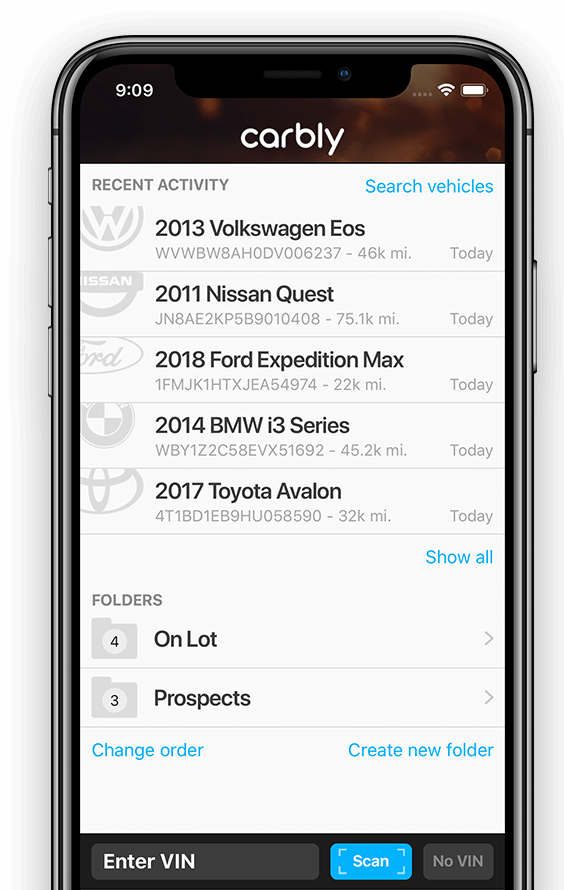
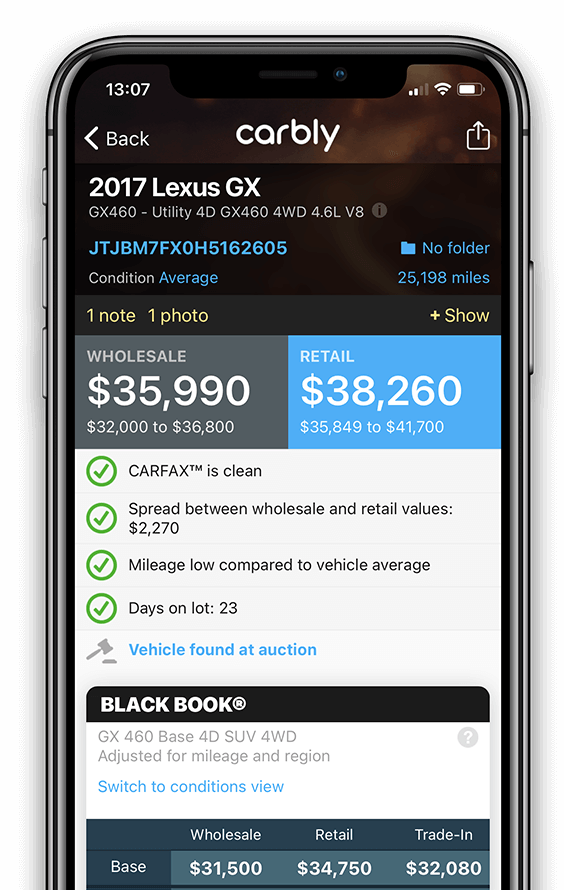
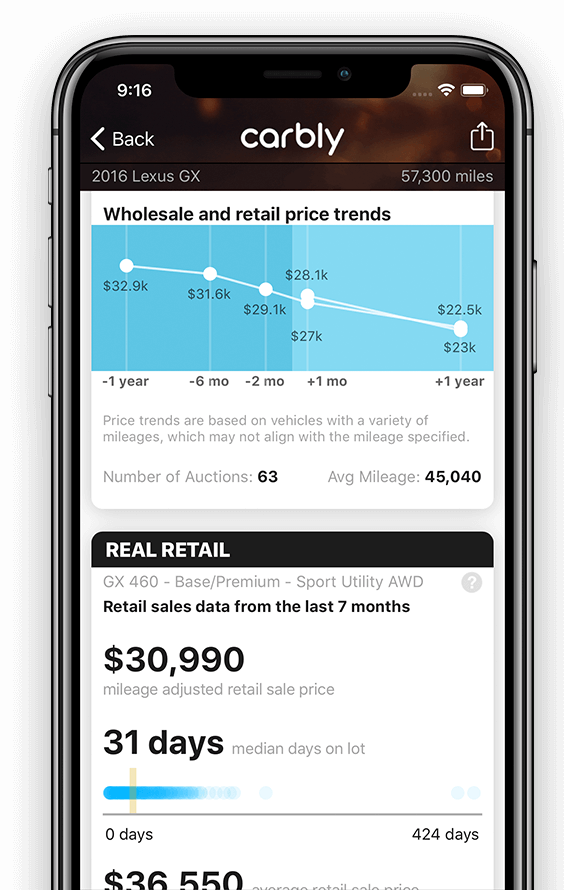
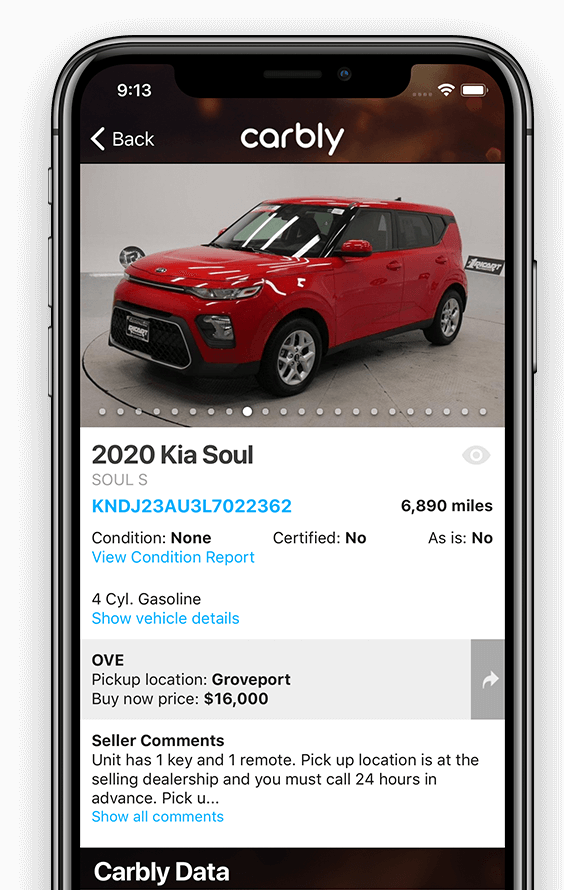
Carbly Auctions Plus helps dealers search wholesale inventory across hundreds of auctions and marketplaces. Carbly's appraisal workflow can then bring vehicle values, condition, history, costs, local retail evidence, and target profit into the same acquisition decision.
The wider the search, the more important it becomes to keep those pieces connected.
Run a Final Check Before the Lane
Shortly before bidding, verify:
- The listing, VIN, mileage, trim, and equipment have not changed
- The auction announcements and condition report are current
- The fee estimate matches the expected purchase-price range
- The transportation estimate is current and uses the correct destination
- The vehicle is operable and does not require special handling
- The pickup window and storage policy are understood
- The inspection plan fits within the arbitration timeline
- The recon allowance reflects the latest photos and disclosures
- The local retail range still supports the plan
- The maximum bid has been updated for any new information
This review should take only a few minutes when the assumptions were recorded during the appraisal.
Use the Estimate, but Finish the Math
Transportation pricing belongs beside the vehicle while it is being evaluated. Seeing that estimate early helps dealers compare more auctions, search farther when the opportunity justifies it, and avoid discovering a major cost after the purchase.
It should not be mistaken for the complete landed cost.
Start with the local retail exit. Add the auction fees, transportation, release costs, inspection, recon, time, and unresolved risk. Then work backward to the amount the dealership can afford to bid.
The right remote purchase is not the vehicle with the lowest hammer price or the cheapest transportation estimate. It is the vehicle whose complete cost still supports the retail outcome.
Start Your Free TrialWant to search more auction inventory without losing sight of the complete acquisition cost? Carbly Auctions Plus helps dealers find wholesale opportunities, evaluate the retail exit, and protect target profit before bidding. Start your free 14-day trial.