A recon allowance can look precise without being accurate.
A dealer appraises a vehicle, assigns $1,500 for reconditioning, calculates a maximum bid, and moves on. The number follows the vehicle through the auction and into inventory as if it were a known cost.
But recon is rarely known that early. It is an estimate built from incomplete information, and the assumptions behind it can change before the vehicle is purchased.
The short answer is this: review your store's recon assumptions monthly, but update the allowance on an individual vehicle whenever meaningful new information appears.
The solution is not to stop using recon allowances. It is to treat them as estimates that become more precise as better information becomes available.
Recon Should Change When the Evidence Changes
A recon allowance should not move because a bidder wants more room. It should change when new information affects the likely cost of getting the vehicle ready for sale.
That information could include:
- A more detailed condition report
- New inspection photos
- A pre-sale announcement
- A mechanical or diagnostic inspection
- New tire, glass, key, or body damage information
- A post-sale inspection result
- Damage discovered during dealership intake
- A firm estimate from an internal technician or outside vendor
Each update should answer a simple question: What do we know now that we did not know when the last estimate was made?
If the answer is nothing, the recon allowance probably should not change.
Keep Recon Separate From the Other Costs of the Purchase
Recon is one part of the acquisition decision, not a catchall for every expense or risk associated with the vehicle.
Keep these numbers distinct:
- Recon allowance: The estimated direct cost of making the vehicle retail-ready
- Time-to-line estimate: The expected time required for transportation, inspection, recon, photos, and merchandising
- Landed cost: Purchase price, auction fees, transportation, recon, and other direct acquisition costs
- Holding exposure: The capital cost and market risk created while the vehicle is unavailable or unsold
All four should affect the decision to buy. They should not all be hidden inside the recon allowance.
Separating them makes the estimate easier to audit. It also shows whether a disappointing result came from unexpected repairs, expensive transportation, a slow recon process, or a weakening retail market.
Start With a Store-Level Baseline
Before estimating recon on an individual vehicle, establish realistic starting points for the types of vehicles your dealership normally buys.
The baseline might vary by:
- Vehicle age and mileage
- Brand or vehicle class
- Acquisition source
- Condition-report score
- Inspection availability
- Vehicle history
- Your dealership's retail-ready standard
A three-year-old off-lease vehicle with a detailed condition report should not automatically receive the same allowance as a ten-year-old trade with limited service history.
Build the baseline from completed work, not memory. Compare original estimates with actual recon costs and look for consistent misses by age, mileage, source, condition, and repair category.
The purpose is not to create one perfect average. It is to create useful starting points for different risk profiles.
Update the Allowance Before Bidding
The first vehicle-level recon allowance is usually created while reviewing a trade, auction runlist, or other acquisition opportunity.
At this stage, separate known work from unresolved risk.
Known work may include visible tires, disclosed glass damage, a missing key, obvious cosmetic repairs, scheduled maintenance, or an identified warning-light repair.
Unresolved risk may include an undiagnosed warning light, hidden body damage, electrical problems, an uncertain maintenance history, or a condition report that does not cover the systems most likely to create a large expense.
Do not hide that uncertainty inside an optimistic number. Use a base allowance for the known work and a separate contingency for probable or unresolved repairs.
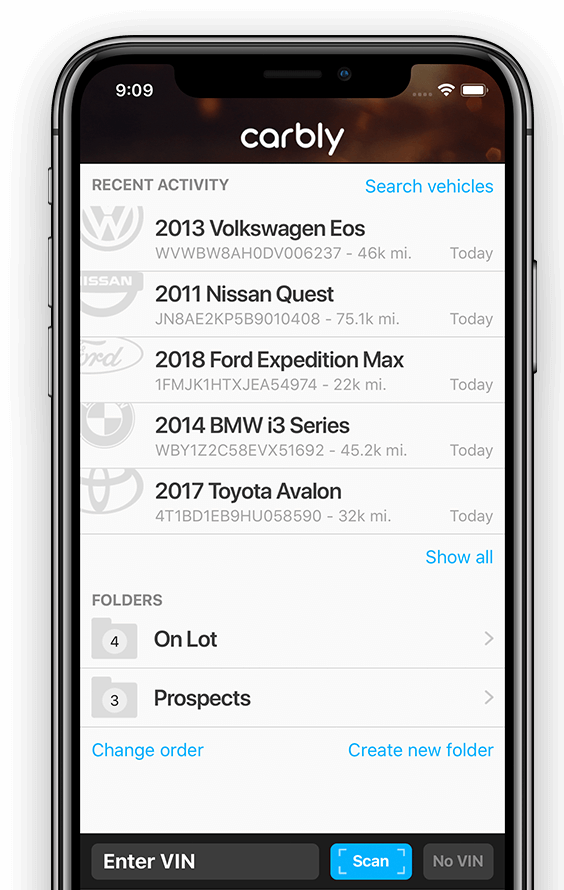
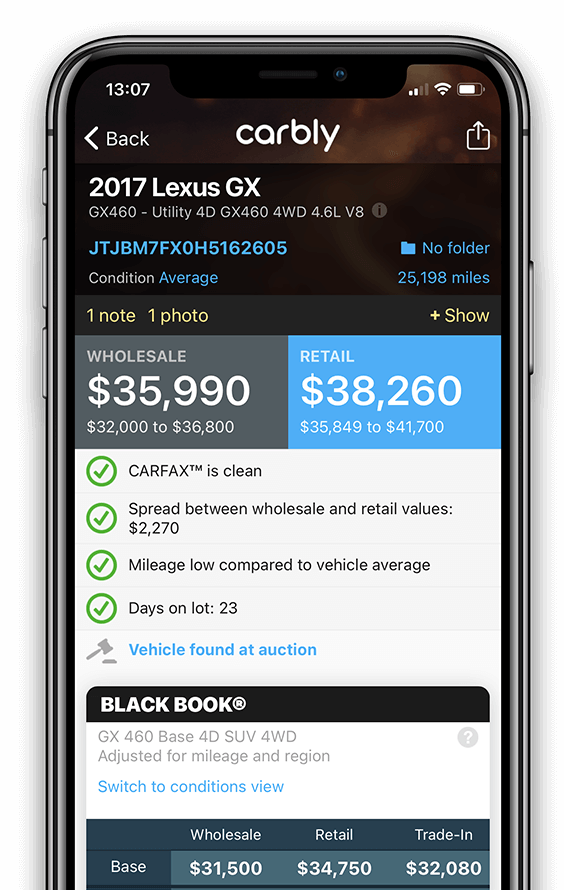
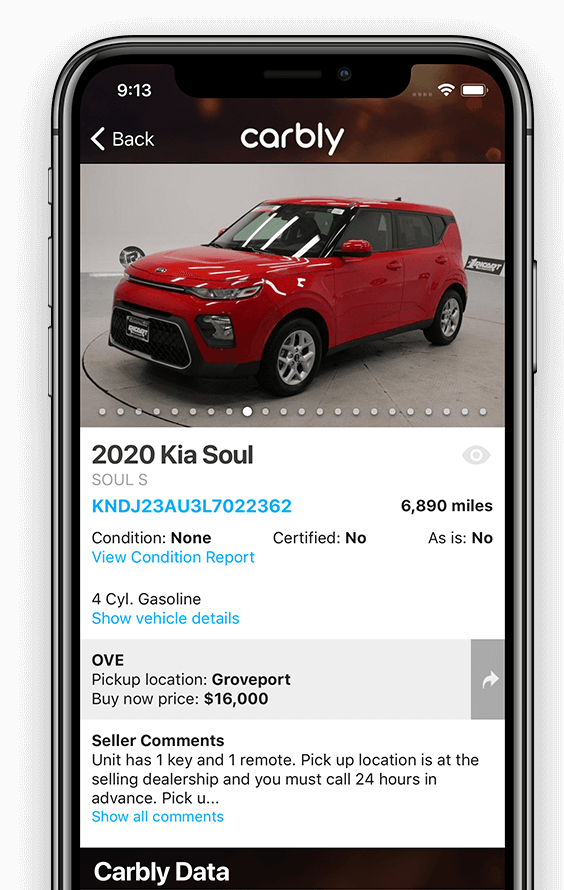
Carbly Auctions Plus lets dealers set default recon costs by condition-report score and incorporate those costs into vehicle-level profit calculations. Those defaults provide a consistent starting point, but the allowance should still be updated when the individual vehicle gives you better evidence.
Recheck It Shortly Before the Sale
Auction information can change between the time a vehicle enters your list and the time it reaches the block.
Before bidding, check for:
- Updated announcements
- New condition-report details
- Changed inspection status
- Additional photos
- Mileage corrections
- Title or disclosure updates
- Changes in current retail value or local competition
If the likely recon cost increases and the retail opportunity has not improved, the maximum bid should normally come down. The recon allowance and bid ceiling should remain connected.
Competitive pressure is not new evidence. Another bidder's willingness to pay more does not make the tires, windshield, or mechanical work less expensive.
After Purchase, Turn the Allowance Into a Forecast
The terminology should change as the vehicle moves through the process.
- Initial allowance: The first estimate based on the information available during sourcing or appraisal
- Final pre-bid allowance: The estimate used to establish the walk-away number
- Post-purchase forecast: The updated estimate after inspection and diagnosis
- Approved recon plan: The work the dealership has authorized
- Actual recon cost: The completed direct cost of making the vehicle retail-ready
Preserving each stage creates an audit trail. It shows whether the original allowance was realistic, whether important information was missed before bidding, and whether the final cost grew because of diagnosis, scope changes, or execution.
A Simple Example
Suppose an auction vehicle begins with a $1,200 recon allowance based on its age, mileage, condition score, and your dealership's history with similar vehicles.
Updated photos reveal windshield damage and two tires that were not clear in the original listing. The final pre-bid allowance rises to $1,850. If the retail value and other costs have not changed, the bid ceiling should fall by the added exposure.
After purchase, a technician identifies another $600 repair. The post-purchase forecast becomes $2,450. At that point, the dealership can compare the new total with the expected retail outcome and decide whether to complete the planned work, change the retail strategy, investigate available arbitration rights, or exit the vehicle.
The important part is not that the first estimate was wrong. Early estimates will sometimes be wrong. The important part is that the decision changes when the evidence changes.
Operational Capacity Still Matters
Shop and vendor capacity should not be buried in the recon allowance, but it still belongs in the acquisition decision.
A repair-heavy vehicle may be acceptable when your service operation has room. The same vehicle may be a poor acquisition when the shop is already backed up, parts are delayed, or outside vendors cannot meet your target front-line date.
In that situation, keep the expected repair cost in recon and account for the delay separately. The longer time to line increases carrying exposure and shortens the vehicle's useful retail window. That may justify a lower bid even if the direct repair estimate has not changed.
Use Ranges When the Evidence Is Incomplete
False precision can be dangerous.
If a mechanical issue could cost either $400 or $1,800 depending on the diagnosis, entering $400 as the allowance does not make the risk disappear.
A more useful estimate would show:
- Known work
- Probable work
- Contingency for unresolved risk
- The total allowance used to set the bid
The bid-setting allowance should reflect the dealership's tolerance for downside, not simply the least expensive possible repair.
Watch for Allowances That Only Move in One Direction
Recon allowances that repeatedly decrease before the auction and increase after purchase point to a process problem.
That pattern can appear when buyers lower the estimate to justify a higher bid, assume the least expensive repair, or leave uncertain work out of the calculation.
Compare the initial allowance, final pre-bid allowance, post-purchase forecast, and actual cost. Over time, this will show whether your assumptions are becoming more accurate and where optimism enters the process.
Connect Recon to the Retail Decision
Recon should never be evaluated by itself.
A higher allowance may be acceptable when the vehicle has strong local demand, limited competing supply, a favorable price band, a history of turning for your store, and enough retail spread to protect the target gross.
The same recon exposure may be unacceptable on a vehicle with weak demand, a crowded local market, or a narrow margin.
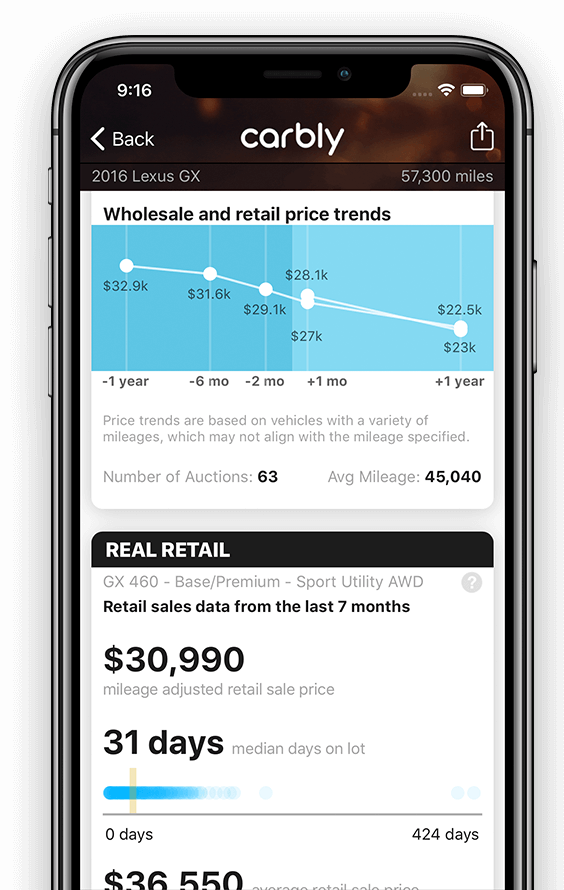
Use Live Local Market to examine the vehicle's current retail position, then evaluate the purchase price, recon allowance, fees, transportation, expected time to line, and target gross together. The goal is not simply to estimate the repair bill. It is to determine whether the complete deal still makes sense.
Set a Review Rhythm
A practical operating schedule is:
- For each vehicle: Update the allowance whenever a condition report, inspection, announcement, diagnosis, or estimate provides meaningful new evidence.
- Weekly: Review vehicles with large estimate changes, unresolved diagnoses, missed front-line dates, or actual recon materially above plan.
- Monthly: Compare estimated and actual recon across recently completed vehicles. Look for repeat misses by source, age, mileage, condition, repair category, buyer, or vendor.
- Quarterly: Recalibrate baseline allowances, labor rates, parts assumptions, vendor pricing, and contingency rules.
The exact cadence can vary with volume, but the principle should not: vehicle-level allowances change with evidence, and store-level assumptions change with actual results.
Make Recon a Purchasing Discipline
A recon allowance is not a one-time entry. It is the first version of an estimate that should become more accurate as the vehicle moves from appraisal to acquisition to the front line.
Review your baselines monthly. Update each vehicle when new evidence appears. Preserve every version of the estimate, and compare the original allowance with the final cost.
That is how recon becomes a purchasing discipline instead of a placeholder. The bid stays grounded, the expected gross stays credible, and the dealership gets better information for the next vehicle it considers.
Start Your Free TrialWant to make better acquisition decisions before the bidding starts? Carbly helps dealers evaluate wholesale opportunities using vehicle values, condition, history, local retail evidence, configurable costs, and target profit. Start your free 14-day trial.