How Much Used-Car Inventory Should Your Dealership Carry?
The right inventory level is not the number of vehicles that fit on your lot.
It is the number your dealership can source, prepare, merchandise, and sell within a healthy turn window without tying up too much capital or allowing avoidable aging risk to build.
For most dealers, the best starting point is sales pace.
A simple planning formula is:
Average monthly retail sales x target front-line days' supply / 30 = target front-line inventory
If your dealership sells 24 used vehicles per month and wants 45 days of front-line supply:
24 x 45 / 30 = 36 retail-ready vehicles
That does not mean 36 is automatically the right answer. It gives you a starting point that can be adjusted for pipeline time, seasonality, inventory mix, capital, and local demand.
Define Which Inventory You Are Counting
Before setting a target, separate your inventory into operational groups:
- Retail-ready and available
- In transit
- Waiting for inspection
- In recon
- Waiting for title or paperwork
- Sold but not delivered
- Marked for wholesale or disposal
A dealership may own 50 vehicles while only 35 are available for a shopper to buy today.
The distinction matters. Vehicles waiting for transportation, recon, photos, or a title still consume capital, but they do not provide the same selling opportunity as front-line inventory.
Your dealership needs two related targets:
- A front-line inventory target
- A total owned-inventory range that includes the acquisition and recon pipeline
Understand Days' Supply Versus Days to Sale
Days' supply and days to sale answer different questions.
Days' supply estimates how long the current available inventory would support the dealership's recent sales pace.
Days to sale measures how long an individual vehicle takes to sell.
A store can have 45 days of supply while still owning several vehicles that have been on the lot for 90 days. That inventory count may look reasonable overall, but the mix underneath it can still be unhealthy.
Use days' supply to plan how much inventory the dealership needs. Use days to sale and age buckets to evaluate the quality of the vehicles it already owns.
Calculate the Pipeline Allowance
Front-line inventory is only part of the total.
If your dealership sells 24 vehicles per month, it averages about 0.8 retail sales per day.
Suppose the average vehicle takes seven days to move from acquisition to front-line readiness:
0.8 daily sales x 7 pipeline days = 5.6 pipeline vehicles
Round that to six vehicles.
The store might plan for:
- 36 retail-ready vehicles
- Approximately 6 vehicles in transit, inspection, or recon
- Approximately 42 total owned vehicles
This is an operational estimate, not a rigid rule. A store with fast transportation and efficient recon may need a smaller pipeline. A store with longer title delays or recon-heavy inventory may need a larger one.
The pipeline should be sized around normal flow. It should not grow because vehicles are getting stuck.
Manage to a Range, Not One Perfect Number
Inventory demand changes from week to week.
Instead of treating 42 vehicles as the only acceptable number, the dealership might establish a working range, such as 38 to 44 units.
The lower end helps identify when sourcing needs to accelerate. The upper end provides a warning that acquisitions may be outpacing sales or operational capacity.
A useful range should include:
- A target front-line count
- A normal pipeline allowance
- A lower threshold that triggers sourcing attention
- An upper threshold that triggers an inventory review
This keeps the store from reacting to every sold unit or open parking space.
Use More Than One Month of Sales
Do not build the inventory plan around the last 30 days alone.
One strong or weak month can produce a misleading target. Review:
- The last 30 days for current momentum
- The last 90 days for a more stable sales pace
- The same period last year for seasonality
- Recent months with healthy gross and turn
The last point is important. A month with high sales but heavy markdowns and weak gross may not represent performance the store wants to reproduce.
Look for a sustainable sales pace, not simply the highest number the dealership has reached.
Adjust When Sales Have Been Limited by Inventory
Historical sales do not always represent true demand.
If the dealership has been understocked, recent retail volume may be lower because shoppers could not find enough suitable vehicles. Using that sales number without adjustment would produce an inventory target that keeps the store understocked.
Look for additional signals:
- Lead volume on vehicles you stock too rarely
- Shoppers who left because there were no suitable alternatives
- Proven models that sell soon after arrival
- Sales pace during better-stocked periods
- Local demand for segments missing from your lot
- Price bands with strong sales but limited current supply
Your own sales history remains important, but it should be interpreted alongside local-market demand and missed opportunities.
Do Not Count Aged Units as Healthy Supply
A store may own 60 vehicles against a calculated target of 45.
What if 15 of those vehicles are more than 75 days old and no longer fit the market?
Those units still count financially. They should not give the dealership confidence that it has enough productive inventory.
Healthy front-line inventory should have:
- A credible retail price
- Competitive local positioning
- Complete merchandising
- Reasonable shopper demand
- A path to sale within the target window
- Enough remaining margin to support the plan
Buying additional vehicles does not resolve aged inventory. The older units still need a clear pricing, wholesale, or disposal decision.
Track both total supply and healthy supply. The gap between them is an important inventory-risk signal.
Set Targets by Price Band and Segment
A single inventory count can hide a poor mix.
A dealership might have the correct number of vehicles overall but too many concentrated in one retail range.
For example, a 50-unit store might have:
- 4 vehicles under $15,000
- 9 vehicles from $15,000 to $20,000
- 24 vehicles from $20,000 to $30,000
- 13 vehicles above $30,000
If most customers shop below $20,000, the overall inventory count is not as healthy as it appears.
Calculate days' supply within each major price band:
Vehicles in the price band / average daily sales in that price band = price-band days' supply
Apply the same thinking to:
- Body style
- Model age
- Mileage
- Fuel type
- Financing profile
- Newer versus older inventory
- Proven performers versus experimental units
The dealership may have 45 days of supply overall while carrying 20 days in one price band and 80 days in another.
The total count matters. Its composition matters more.
Use Store Performance and Market Demand Together
Your dealership's history shows what has worked. Your local market helps determine whether those results are likely to continue.
Before expanding a segment, ask:
- How quickly have we sold similar vehicles?
- What gross did they produce?
- How much recon did they require?
- How many leads did they generate?
- How many similar vehicles are available locally?
- Is local supply increasing or decreasing?
- Are competitors reducing prices?
- Has shopper demand changed?
A model that performed well six months ago may face a crowded market today. Another segment may be underrepresented on your lot even though local demand is strong.
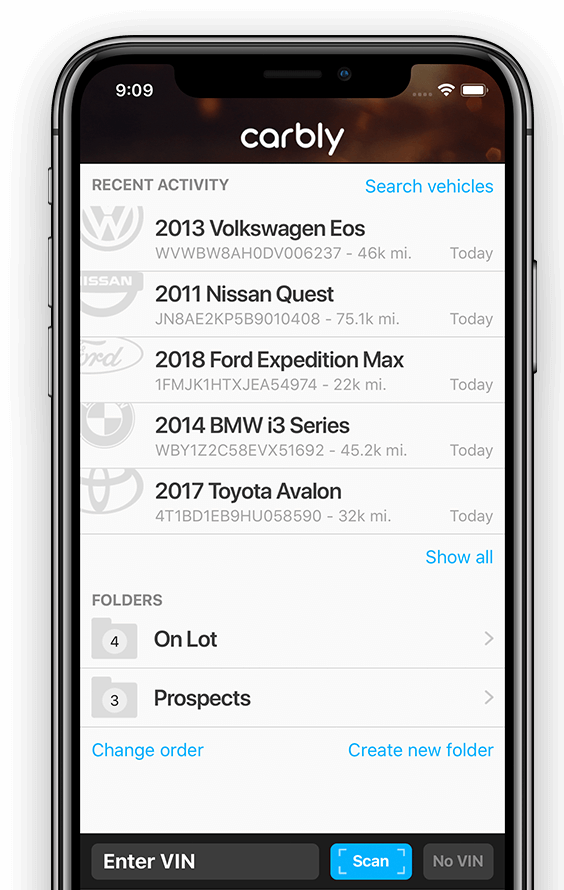
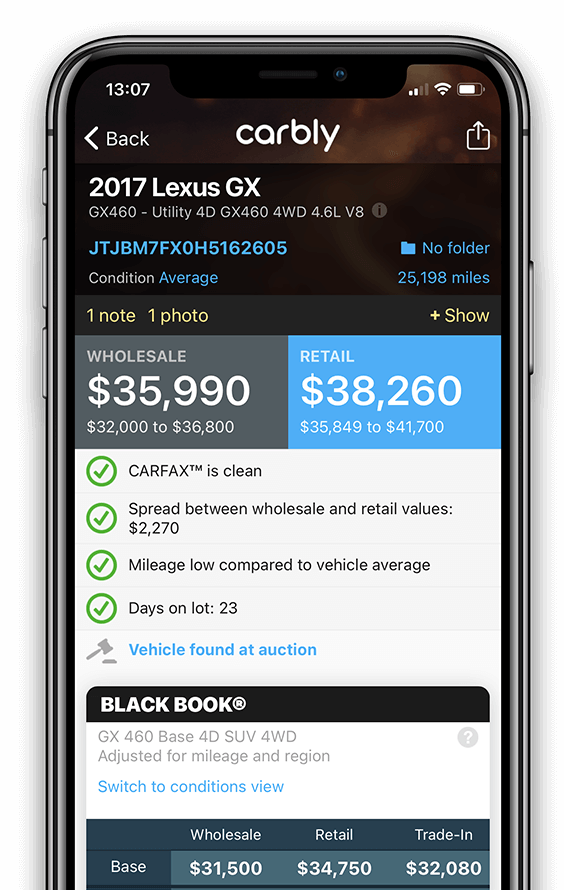
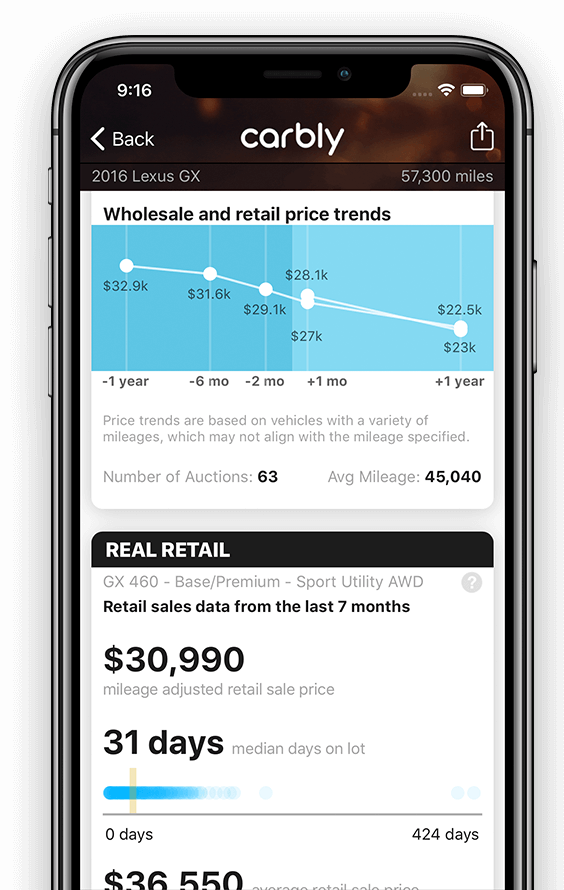
Carbly's Market Tracker adds regional supply, demand, sales, and competitor context to the dealership's own performance history. Lot Sense helps dealers evaluate inventory health, age, pricing, and vehicles that need attention.
Track Units and Dollars
Two dealerships with the same sales pace may need different inventory targets.
One may own most of its inventory outright. Another may rely heavily on a floorplan. One may carry inexpensive vehicles. Another may have much more capital tied up in each unit.
Track inventory in both units and dollars.
Review:
- Total inventory value
- Average acquisition cost
- Floorplan exposure and interest expense
- Recon commitments
- Transportation costs
- Capital tied up in aged units
- Available capital for new opportunities
A dealership may have the correct number of vehicles while carrying too much value in a few expensive units.
The inventory plan should protect the ability to acquire better vehicles when they become available.
Respect Recon and Merchandising Capacity
A dealership should not acquire inventory faster than it can prepare it.
If recon can complete ten vehicles per week, buying fifteen per week creates a growing queue. The front line may look understocked while capital accumulates in vehicles that are not ready to sell.
Monitor:
- Average days from purchase to arrival
- Average days from arrival to inspection
- Average days in recon
- Average days from recon completion to online publication
- Total time from purchase to front-line readiness
Improving this process can increase available inventory without purchasing another vehicle.
Reducing average time-to-front-line from ten days to six gives the dealership four additional selling days on every acquisition.
Recognize the Signs of Understocking
Your dealership may be understocked when:
- Healthy front-line supply is below the target range
- Salespeople lack relevant alternatives for shoppers
- Strong price bands have too few vehicles
- Proven models are repeatedly absent
- Recently sold units cannot be replaced quickly
- The sourcing process has become reactive
- Retail sales appear limited by availability
Understocking does not mean acquisition standards should be lowered. It means the sourcing process may need more reach, better preparation, or clearer target lists.
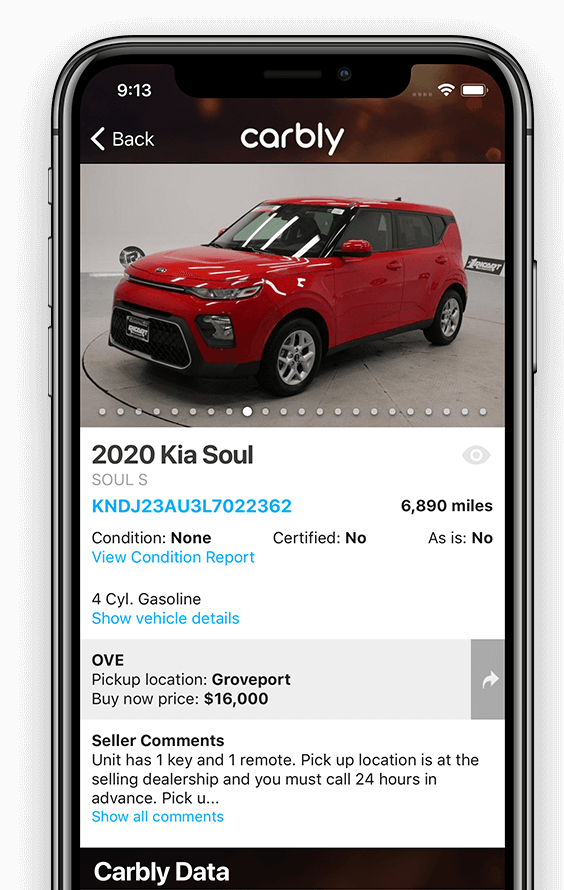
Carbly Auctions Plus helps dealers search auction inventory across hundreds of auctions and digital marketplaces while keeping their buy criteria in view.
Recognize the Signs of Overstocking
Your dealership may be overstocked when:
- Average age is rising
- A growing share of vehicles requires markdowns
- Too many units occupy the same price band
- Similar vehicles compete against one another on your own lot
- Recon and merchandising queues are growing
- Floorplan and carrying costs are rising faster than sales
- Capital is unavailable for stronger opportunities
- Acquisitions are consistently outpacing retail sales
Overstocking is not always obvious. A lot can look full while the inventory underneath it becomes less productive each week.
Review the Target Every Week
Inventory planning should be part of the dealership's weekly operating rhythm.
Review:
- Retail sales over the last 30 and 90 days
- Current front-line inventory
- Vehicles in transit, recon, or title hold
- Healthy front-line days' supply
- Aging by 0-15, 16-30, 31-45, 46-60, and 61-plus days
- Inventory and sales by price band
- Local supply and demand changes
- Vehicles that need to be replaced
- Vehicles that should not be purchased again
- Capital available for the next buying cycle
The target should change when the dealership's sales pace, market, or operational capacity changes. It should not change simply because the lot has open spaces.
Carry the Inventory Your Store Can Turn
A useful inventory target starts with a formula, but it cannot end there.
Calculate front-line needs from a sustainable sales pace. Add the pipeline required to replace sold units. Adjust for seasonality, inventory mix, local demand, recon capacity, and available capital.
Then evaluate the quality of the inventory already owned.
The goal is not to keep the lot full. It is to carry enough of the right vehicles to support sales without allowing excess supply, weak mix, or operational delays to consume gross.
A dealership that can sell 40 well-chosen vehicles efficiently is in a stronger position than one carrying 60 vehicles simply because the space is available.
Start Your Free TrialWant a clearer view of how much healthy inventory your dealership is carrying? Carbly helps dealers source, price, and manage inventory with market data and tools built for better decisions across the vehicle lifecycle. Start your free 14-day trial.