Every dealer has watched a vehicle run through the lane and felt the same pressure. The car looks right. The condition report looks clean enough. The bid is still under book. There might be gross in it.
That is also when bad buys happen.
A vehicle is not worth bidding on just because it is cheap compared with a guide book, similar to something you have sold before, or interesting enough to get attention in the lane. It is worth bidding on only when the likely retail outcome supports the total cost, risk, and time required to get it sold.
For independent dealers, auction discipline matters because one bad unit can tie up capital, consume recon time, weaken turn, and eat the profit from several good buys. Before you bid, work through the vehicle from retail exit back to wholesale ceiling.
Start With The Retail Exit, Not The Auction Price
The first question is not, "What can I buy it for?" The better question is, "What can I realistically sell it for in my market?"
Start with the retail outcome you expect after the vehicle is front-line ready. Look at live local listings, mileage, trim, options, condition, history, and days on market. A clean, low-mile example with strong local demand should not be treated the same as a higher-mile unit with accident history, even if both share the same year, make, and model.
This is where dealers can get in trouble by relying too heavily on a single value. A book value can be useful, but it does not always reflect your local retail market, the exact trim, current supply, or how buyers are reacting right now.
If the local retail ceiling is lower than expected, the wholesale number has to come down with it.
Check Whether The Vehicle Fits Your Inventory Strategy
A good auction vehicle for one dealership may be a bad fit for another. Before bidding, ask whether the unit belongs on your lot.
- Do you have a history of selling this type of vehicle?
- Does it fit your price band?
- Does it match your customer base?
- Can your team recon it efficiently?
- Will it compete well against nearby inventory?
Independent dealers often win by knowing their lane. If your store performs well with affordable SUVs, late-model trucks, or specific import sedans, that should guide your auction search. Chasing a vehicle outside your normal profile can work, but the deal needs enough margin to justify the added uncertainty.
The goal is not to buy interesting cars. The goal is to buy vehicles that give your store a clear path to retail profit.
Use Multiple Valuation Inputs
No single number should decide your bid.
Guide books, wholesale comps, estimated auction sale prices, retail market data, and recent transaction data each tell part of the story. The strongest buying decision comes from comparing them and understanding why they disagree.
If wholesale values are high but local retail comps are soft, the spread may not be real. If book values look attractive but similar vehicles nearby have been sitting for too long, the gross may be theoretical. If retail comps are strong but the vehicle has condition or history problems, the discount needs to be real enough to protect the deal.
Auction vehicles should be evaluated through the full lifecycle:
- Source right: find vehicles that actually match your store and market.
- Buy right: set a wholesale ceiling based on the total opportunity.
- Price right: understand the local retail position before the car reaches your lot.
- Manage right: know how quickly the vehicle needs to move once it is in inventory.
Estimate Recon, Transport, Fees, And Holding Cost
The hammer price is not your true cost.
Before bidding, estimate every cost that will follow the sale. Include auction fees, transport, post-sale inspection, floorplan expense, recon, detail, photos, title work, and any likely mechanical or cosmetic issues. If you are buying remotely, build in extra room for the condition items you may not be able to confirm in person.
It is easy to talk yourself into a vehicle when the spread looks strong before expenses. The real question is what the deal looks like after the vehicle is retail-ready and sitting on your lot.
A simple formula can help:
Expected retail sale price - target gross - estimated total costs = maximum wholesale bid.
That maximum bid should be set before the auction starts. If the bidding passes that number, the vehicle is no longer your deal.
Review History And Condition Before You Fall In Love With The Spread
Some auction vehicles look profitable until the history and condition are factored in.
A prior accident, branded title, structural announcement, odometer issue, poor condition report, missing photos, weak tire depth, or unclear seller disclosure can change the bid quickly. That does not always mean you should pass, but it does mean the vehicle needs to be priced for the risk.
Vehicle history also affects retail exit. Consumers can see accident history, days on market, and price changes across listing sites. If the car will be harder to sell because of its story, your wholesale bid needs to reflect that before you own it.
For online and simulcast buying, consider whether a post-sale inspection is worth the cost. It can be a practical way to reduce risk when you cannot inspect the vehicle yourself before purchase.
Compare Against Local Competition
A vehicle may look great in isolation and still be hard to retail profitably.
Before bidding, look at the vehicles it will compete against. Pay attention to price, mileage, trim, history, certification status, distance from your dealership, and how long comparable vehicles have been listed.
If several similar units are already priced aggressively in your market, you may need to buy the auction vehicle cheaper than expected. If local supply is thin and demand is strong, you may be able to bid with more confidence.
Market day supply can be especially useful here because it gives you a way to think about demand, not just price. A low-supply, fast-moving unit deserves different treatment than a vehicle surrounded by slow-moving comps.
Set A Walk-Away Number Before Bidding Starts
The easiest way to overpay at auction is to decide your max bid while you are bidding.
Set your walk-away number before the vehicle runs. That number should already account for retail price, total costs, recon risk, history, local competition, and your required profit. Once the bid passes that number, stop.
This is not just about discipline. It is about protecting the rest of your inventory plan. Every dollar over your ceiling has to come from somewhere, usually gross, pricing flexibility, or future markdown room.
Auction success is not measured by how many vehicles you win. It is measured by how many vehicles you buy right.
Know The Difference Between A Good Vehicle And A Good Deal
Good vehicles become bad deals when the price is wrong.
A clean unit with strong demand can still be a pass if the auction price leaves no room for recon, holding cost, and profit. A vehicle with a weaker history can still be worth bidding on if the discount is large enough and you know how to retail it honestly in your market.
The decision should come down to the relationship between risk and return. If the path to profit is clear, the vehicle may be worth bidding on. If the deal only works under perfect assumptions, it probably is not.
Use Tools That Connect Sourcing, Appraisal, And Market Data
The best auction decisions happen before the lane gets emotional.
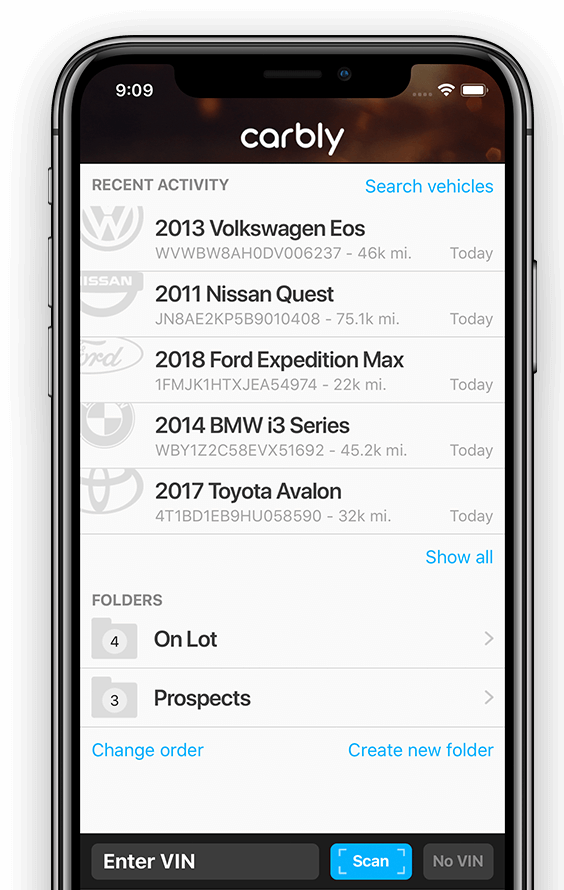
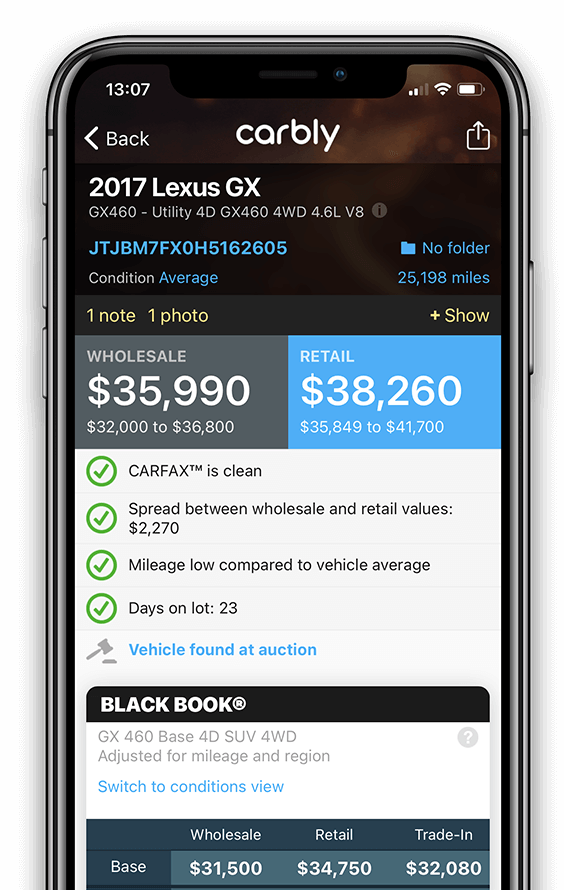
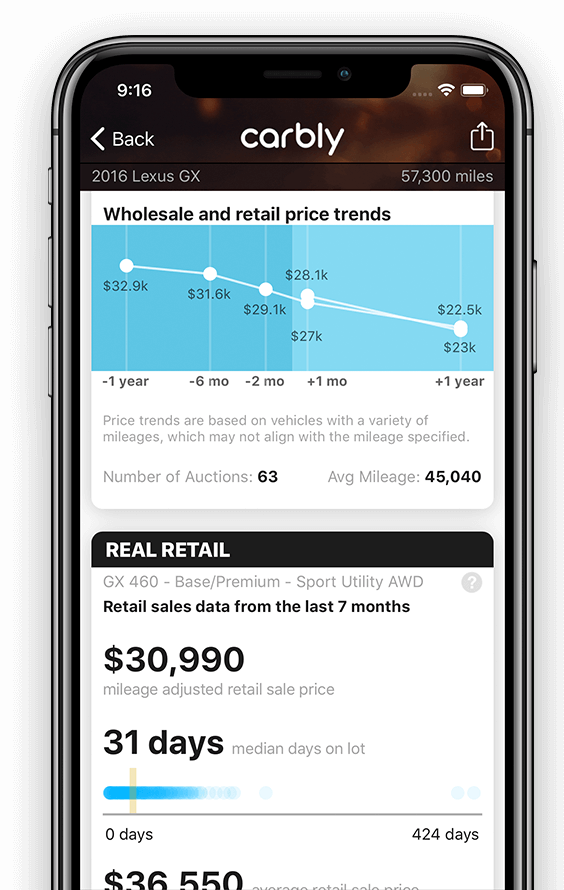
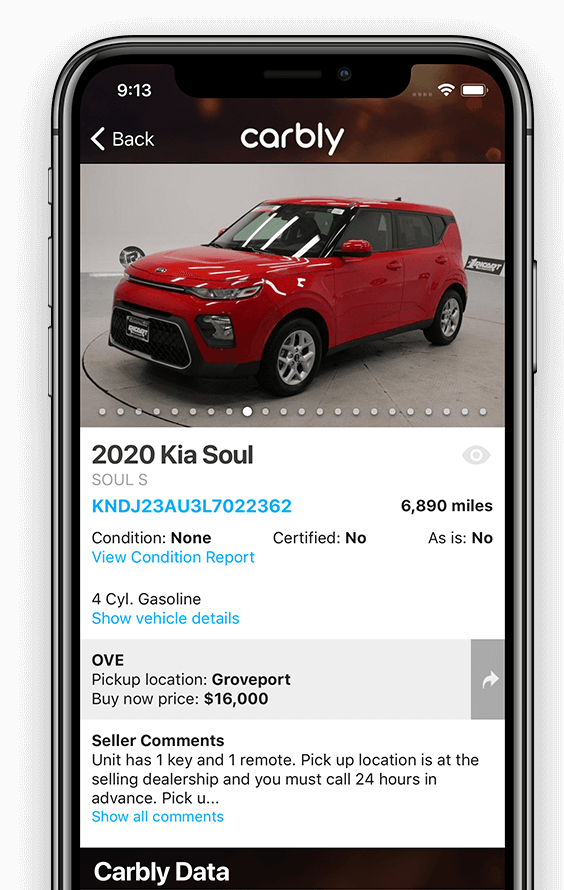
Carbly Auctions Plus helps dealers find wholesale vehicles across auction sources, review market data, and evaluate opportunities before bidding. Paired with Carbly appraisal tools, dealers can compare wholesale values, local retail comps, vehicle history, market supply, and profit potential in one workflow.
That matters because auction buying is not one decision. It is a chain of decisions: source the right vehicles, buy them at the right number, price them against the real market, and manage them before profit leaks away.
Auction Vehicle Bidding Checklist
Before bidding, make sure you can answer these questions:
- What is the realistic retail price in my market?
- How many similar vehicles are listed nearby?
- Are those comps moving quickly or sitting?
- What do wholesale data and guide books suggest?
- Does the vehicle history change the retail outcome?
- What condition or recon risks are present?
- What are the auction, transport, inspection, and holding costs?
- Does this vehicle fit my inventory strategy?
- What gross do I need to make the deal worthwhile?
- What is my maximum bid?
- Am I willing to walk away if the lane passes that number?
If you cannot answer those questions, you are not ready to bid. If you can answer them and the numbers still work, you can bid with confidence.
Start Your Free TrialWant a faster way to evaluate auction vehicles before you bid? Carbly helps dealers source, appraise, price, and manage inventory with the market data needed to make better buying decisions. Start your free 14-day trial.