Affordability is shaping the used-car market again, and compact cars are right in the middle of it.
According to Cox Automotive's May 2026 Manheim Used Vehicle Value Index, compact cars were up 12.3% in non-adjusted wholesale values since December, the highest gain of any major segment. Cox also reported that used-vehicle buyers remain price-conscious, with the top five selling brands in April averaging about 7% below the overall average used-vehicle listing price.
That tracks with what many independent dealers already feel in the lane. Shoppers still need transportation, but a lot of them are payment-sensitive. A clean, affordable compact can look like exactly the kind of unit that should turn quickly.
But that does not mean every compact car is worth chasing.
When a segment gets hot, the biggest risk is simple: dealers start bidding as if demand alone guarantees profit. It does not. A compact car is only a good buy if the retail exit, total cost, local competition, and turn risk still support the number.
Affordability Creates Demand, But Demand Can Get Overpriced
Compact cars often sit in a useful price band for independent dealers. They can appeal to first-time buyers, commuters, payment-sensitive customers, subprime buyers, and shoppers who are trading down from higher-cost vehicles.
That gives the segment a real market advantage when affordability is tight.
The problem is that everyone else can see it too. If more buyers are chasing the same affordable units, wholesale prices can move faster than retail prices. That is where the spread gets squeezed.
A dealer might be right that a compact car will sell. The question is whether it will sell for enough, fast enough, after recon, transport, auction fees, floorplan, and markdown risk.
The vehicle has to be affordable for the customer without becoming too expensive for the dealer.
Start With The Retail Exit
Before deciding whether to bid up, start with the retail exit.
Do not begin with book value. Do not begin with the auction estimate. Do not begin with what a similar unit brought last week.
Start with this question:
What can this exact vehicle realistically sell for in my market?
That means looking at:
- Similar year, make, model, and trim
- Mileage bands
- Accident or damage history
- Title status
- Condition
- Local asking prices
- Days on market
- Price changes on competing vehicles
- Distance from your store
- Whether the strongest comps are franchise, independent, or private-party listings
A compact car with clean history, good mileage, and a strong trim may deserve a different bid than a base model with accident history and thin retail spread. The segment may be hot, but the individual unit still has to earn the bid, and tools like Carbly's Live Local Market help dealers compare nearby listings, mileage, history, pricing, and days on market before setting a ceiling.
Check Local Supply Before Trusting National Demand
National market data can tell you that compact cars are gaining strength. It cannot tell you whether the specific compact in front of you is a good fit for your lot.
That is where local supply matters.
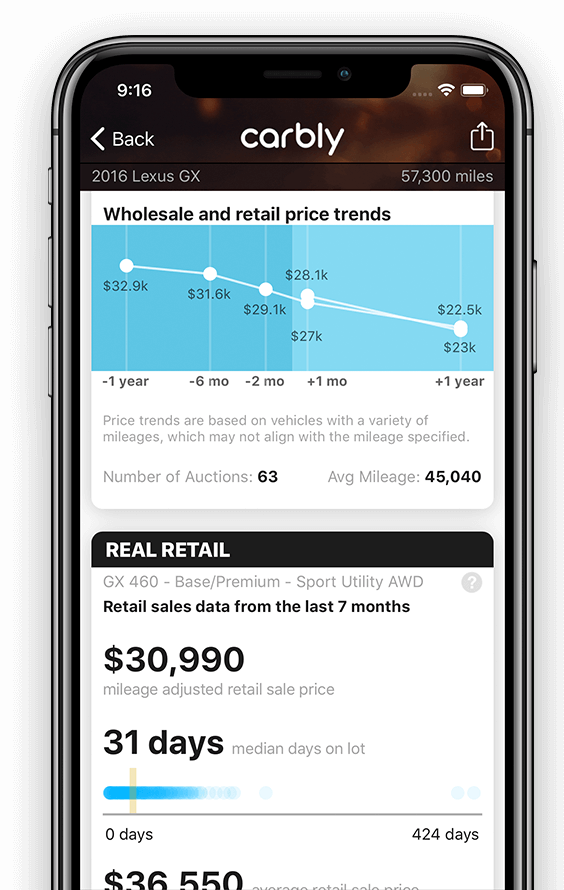
If there are only a few similar cars in your market and the available units are priced high, you may have room to bid more aggressively. If the local market is crowded with similar compacts, and several have been sitting for weeks, the national trend may not help you. Carbly's Market Tracker helps dealers add regional supply and demand context, so they can see whether a segment is tightening locally or simply getting bid up at auction.
Look beyond the average price. Pay attention to the shape of the market.
Are the cheapest comps rougher than your target unit? Are the expensive comps low-mile, certified, or franchise-backed? Are cars moving, or are dealers just asking too much? Is your store able to compete on price and still hold gross?
A compact car can be a great affordability play in one ZIP code and a crowded, low-margin fight in another.
Know When The Bid Deserves To Move Up
There are times when bidding up on a compact car makes sense.
You may be justified in raising your ceiling when:
- Local supply is thin
- Similar vehicles are selling quickly
- The unit fits your proven inventory profile
- The history is clean
- Recon risk is low
- Mileage is in a desirable band
- The trim or options give it a real retail advantage
- The retail exit still supports target gross after all costs
- You have a clear pricing plan before the vehicle reaches your lot
In other words, bid up when the higher bid is backed by a better retail outcome, not just by pressure in the lane.
The best buyers are not afraid to pay more for the right unit. They are afraid to pay more without knowing why.
Know When To Hold Back
The flip side matters just as much.
Do not let a hot segment pull you into a weak deal. Hold back when:
- The local market is already crowded
- Similar units have long days on market
- The vehicle has accident or damage history
- The trim is weak compared with nearby comps
- Mileage pushes it outside your ideal retail profile
- Recon is uncertain
- The auction condition report leaves too many questions
- The bid only works if everything goes perfectly
- Your planned retail price would make you one of the highest-priced listings in the market
That last point is important. If your bid forces you to price at the top of the market, you need a reason the customer will choose your car. If the only reason is "I paid too much," that is not a pricing strategy.
Build The Full Cost Stack Before Bidding
A compact car can look affordable at the hammer price and still become expensive once the real cost stack is added.
Before bidding, estimate:
- Auction fee
- Transport
- Post-sale inspection
- Mechanical recon
- Tires, brakes, windshield, paint, detail, and photos
- Title and admin costs
- Floorplan or holding cost
- Expected markdown room
- Target gross
Then back into the maximum bid.
A simple framework:
Expected retail sale price - target gross - total estimated costs = maximum wholesale bid
If the auction moves past that number, the car is no longer your deal.
This is especially important in a rising segment. When compact values move up quickly, it can feel like yesterday's ceiling is no longer relevant. Sometimes that is true. But the new ceiling still has to be built from the expected retail outcome.
Use The Full Inventory Decision
Compact cars are a good example of why dealers need more than a VIN scan or a single book value.
A strong buying decision has to move through the full inventory lifecycle.
- Source right: is this the kind of compact your store should be chasing?
- Buy right: what is the highest number that still protects profit?
- Price right: where will this car sit against the real local market?
- Manage right: if it does not move quickly, when will you adjust before profit leaks away?
That is the difference between buying a vehicle because the segment is hot and buying a vehicle because it works for your business.
A Practical Compact Car Bidding Checklist
Before bidding up on a compact car, ask:
- Is this vehicle in a price band my customers are actively shopping?
- Do I have recent success selling this model or segment?
- How many similar units are listed nearby?
- Are those units moving or sitting?
- Is my target unit better, worse, or average compared with local comps?
- Does the vehicle history change the retail outcome?
- What is the real recon risk?
- What is the likely retail price, not just the asking price?
- What total cost will I have after fees, transport, and recon?
- What gross do I need?
- What is my walk-away number?
- Am I willing to stop if the bidding passes it?
If you cannot answer those questions, the lane is moving faster than your decision process.
How Carbly Helps
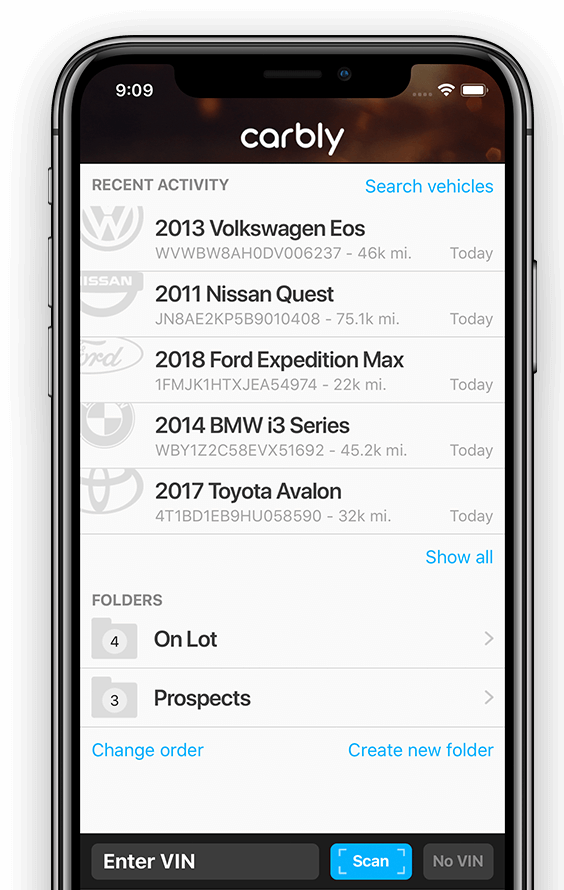
Carbly helps dealers connect auction sourcing, appraisal, local market pricing, and inventory decisions in one workflow.
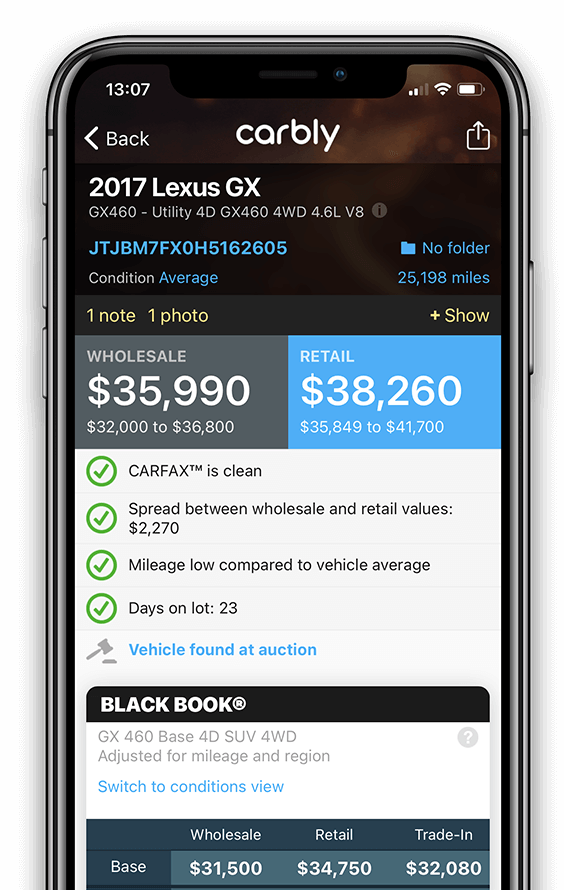
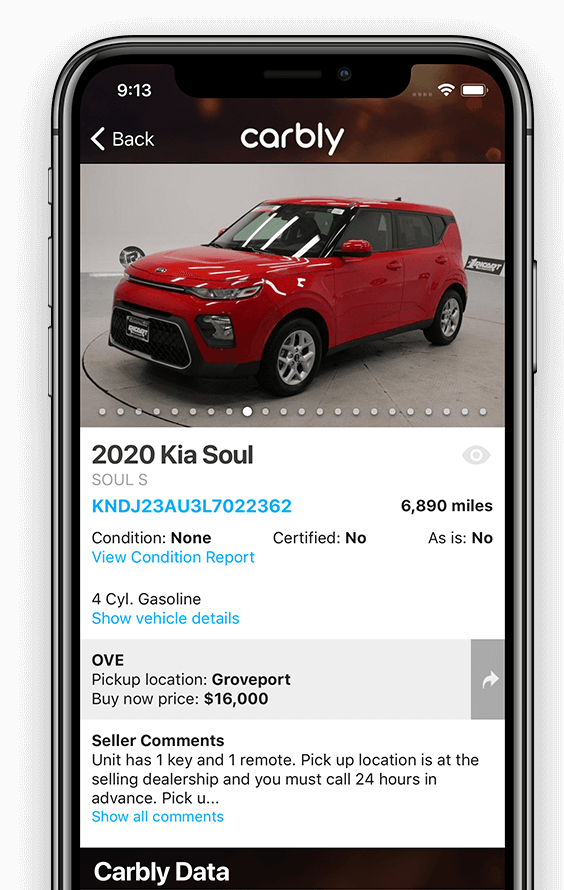
With Carbly Auctions Plus, dealers can find wholesale vehicles across auction sources and evaluate opportunities before bidding. Paired with Carbly appraisal tools, Live Local Market, and Market Tracker, dealers can compare trusted values, auction context, vehicle history, nearby retail comps, regional supply and demand, and expected retail opportunity before deciding whether to stretch or walk away.
Compact cars may be the affordability battleground right now. The dealers who win will not be the ones who simply bid the highest. They will be the ones who know which affordable units still have a clear path to profit.
Start Your Free TrialWant a faster way to evaluate compact cars before you bid? Carbly helps dealers source right, buy right, price right, and manage right with the market data needed to make better inventory decisions. Start your free 14-day trial.