Used-car pricing gets messy when it becomes a reaction instead of a routine.
A unit ages. A competitor drops price. Leads slow down. A manager notices the car has been sitting longer than expected. Then everyone starts asking the same questions at the wrong time.
Should we cut the price? Did we buy it wrong? Are the comps still the same? Is the car getting activity? Do we hold for gross, or move it before it gets worse?
Those are good questions. The problem is waiting until a unit is already at risk before asking them.
A simple weekly pricing meeting can prevent a lot of that. It does not need to be long. For most independent dealers, 20 focused minutes is enough to catch problems, protect gross, and keep inventory moving.
Why A Weekly Pricing Meeting Matters
Inventory risk builds quietly.
A vehicle can look fine on day 7 and become a problem by day 30 if the local market moves, similar units get cheaper, or the opening price was too optimistic. By the time it shows up in a 45-day or 60-day report, the store may have already lost the best window to act.
The point of a weekly pricing meeting is not to mark everything down.
The point is to make pricing decisions before the market makes them for you.
A good meeting should answer three questions:
- Which vehicles need attention this week?
- What changed in the market since we priced them?
- What specific action are we taking?
That is it. Keep it tight.
Before The Meeting: Pull The Right List
Do not start with every vehicle on the lot. That turns a 20-minute meeting into a wandering inventory review.
Start with a focused list of vehicles that need attention.
Good candidates include:
- Units with weak activity
- Units priced above local comps
- Vehicles approaching the next age bucket
- Cars with recent competitor price drops nearby
- Vehicles with a thin gross position
- Units with history, mileage, trim, or condition disadvantages
- New arrivals that need a launch price check
- Cars that no longer match the assumptions made when they were bought
This is where tools like Lot Sense can be useful. The meeting should not depend on someone remembering which cars might be a problem. The system should surface the vehicles that need attention.
Minute 0-3: Review New Arrivals
Start with vehicles that recently hit the lot.
The first retail price is one of the most important pricing decisions you make. If the opening price is wrong, the car may spend the first two or three weeks proving what the local market already knew.
For each new arrival, ask:
- Is the price based on current local comps?
- Are the comps truly comparable?
- Are we accounting for mileage, trim, history, and condition?
- Is the vehicle priced to get attention, or priced to justify what we paid?
- Do we have enough room for future markdowns if activity is weak?
The goal is not always to be the cheapest. The goal is to launch the car in a position that makes sense.
If a vehicle is clearly stronger than the local comps, it may deserve a stronger price. If it is average, it should not be priced like the best unit in the market. If it has a history or mileage disadvantage, the price needs to reflect that before shoppers ignore it.
Minute 3-8: Review Vehicles With Weak Activity
Next, look at vehicles that are not getting the response they should.
Weak activity can mean different things depending on how you track it. It may be low vehicle detail page views, few leads, poor calls, no appointments, or a lack of meaningful engagement after launch.
For each vehicle, ask:
- Is the price too high for the local market?
- Are similar vehicles getting cheaper nearby?
- Is the vehicle showing well online?
- Are photos, descriptions, trim, options, and history clear?
- Is the car competing against better units at similar prices?
- Did we overestimate demand when we bought it?
This is where dealers can make a common mistake. They treat weak activity as a marketing problem when it is really a pricing or inventory-fit problem.
Better photos and descriptions help, but they will not fix a vehicle that is priced out of position.
If a car is getting views but no leads, shoppers may be comparing it and choosing something else. That is a signal worth taking seriously.
Minute 8-13: Review Aging Risk Before It Becomes Aged Inventory
Do not wait for a vehicle to hit 60 or 75 days before discussing it.
The best time to act is usually before the age report makes the decision obvious.
Review vehicles approaching key checkpoints:
- 14 days
- 21 days
- 30 days
- 45 days
- 60 days
The exact checkpoints can vary by store, but the habit matters. Every checkpoint should trigger a decision.
For each vehicle, ask:
- What was our original pricing plan?
- Has the local market changed?
- Are nearby comps moving or sitting?
- Are we still priced correctly?
- What is our gross position today?
- What happens if we wait another week?
- What is the next action?
The wrong answer is "let's keep an eye on it" unless someone owns the next review date and the action threshold.
A pricing meeting should create decisions, not just awareness.
Minute 13-17: Decide The Action
Every vehicle discussed should leave the meeting with one clear action.
Common actions include:
- Hold price
- Reduce price
- Improve merchandising
- Recheck local comps
- Move to a different advertising strategy
- Feature the unit
- Send to wholesale
- Revisit in seven days with a specific trigger
The action should match the reason the vehicle is struggling.
If the car is priced too high, fix the price. If the vehicle is priced fairly but has weak photos or missing options, fix the merchandising. If the market has moved and the gross is already thin, decide whether to protect turn or continue holding.
If the car was simply bought wrong, be honest about it. Sometimes the best decision is to limit the damage before it gets worse.
The meeting should not turn into a debate about every dollar. It should force the team to make a decision based on the best available information.
Minute 17-20: Look For Sourcing Lessons
The last few minutes should look backward.
Pricing problems often start before the vehicle reaches the lot. If the same types of units keep needing attention, that is a sourcing problem, not just a pricing problem.
Ask:
- Are we buying vehicles that do not fit our market?
- Are we stretching too far at auction?
- Are we underestimating recon or holding cost?
- Are we buying trims or mileage bands that shoppers avoid?
- Are we ignoring local supply before acquisition?
- Are we repeating the same mistake because one unit worked once?
This is where the full inventory lifecycle matters.
Source right, Buy right, Price right, and Manage right are connected. If the wrong vehicle is bought at the wrong number, the pricing meeting can only do so much.
The best dealers use pricing reviews to improve future buying decisions.
A Simple Weekly Pricing Meeting Agenda
Here is the full 20-minute structure:
- 0-3 minutes: new arrivals and launch pricing
- 3-8 minutes: vehicles with weak activity
- 8-13 minutes: units approaching age checkpoints
- 13-17 minutes: pricing, merchandising, or exit decisions
- 17-20 minutes: sourcing lessons and next buying adjustments
Keep the meeting focused. Bring the right data. Assign a decision to every vehicle discussed.
What Data To Bring
A useful pricing meeting should include:
- Current retail price
- Original ACV or cost basis
- Target gross
- Days in inventory
- Local comps
- Price position against comps
- Mileage, trim, and history differences
- Recent competitor price changes
- Lead or engagement activity
- Recon or holding-cost concerns
- Next age checkpoint
- Recommended action
This does not need to be complicated. The goal is to remove guesswork from the conversation.
If the team has to spend the whole meeting finding the data, the meeting will fail. The information should be ready before the discussion starts.
How Carbly Helps
Carbly helps dealers make pricing decisions with the full inventory lifecycle in view.
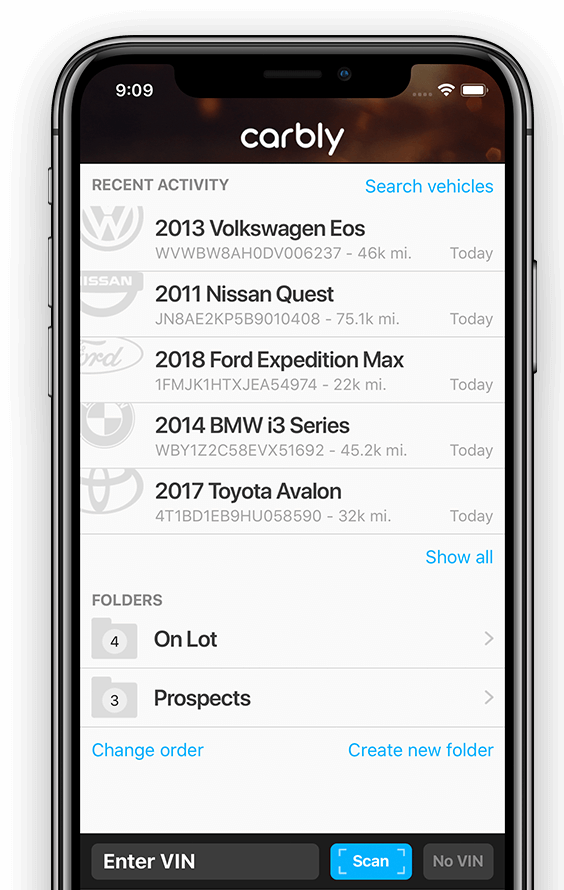
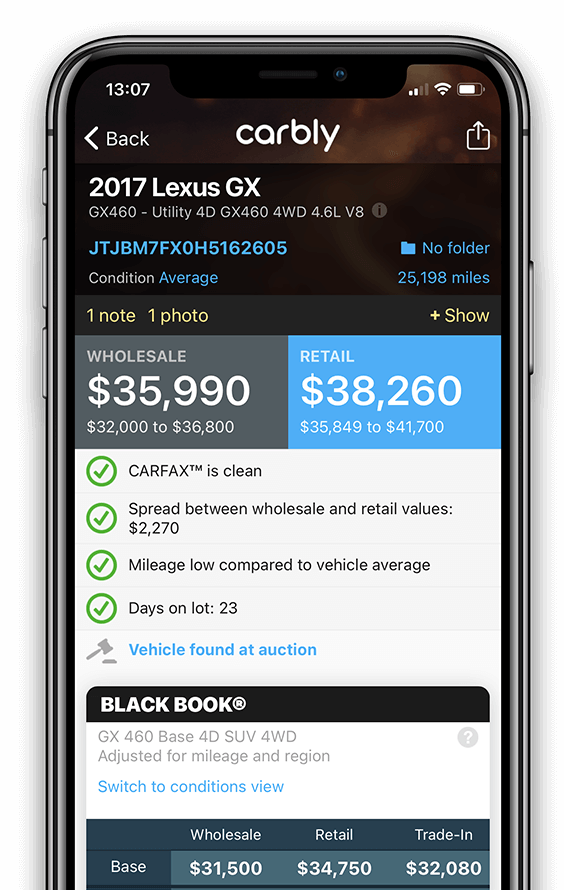
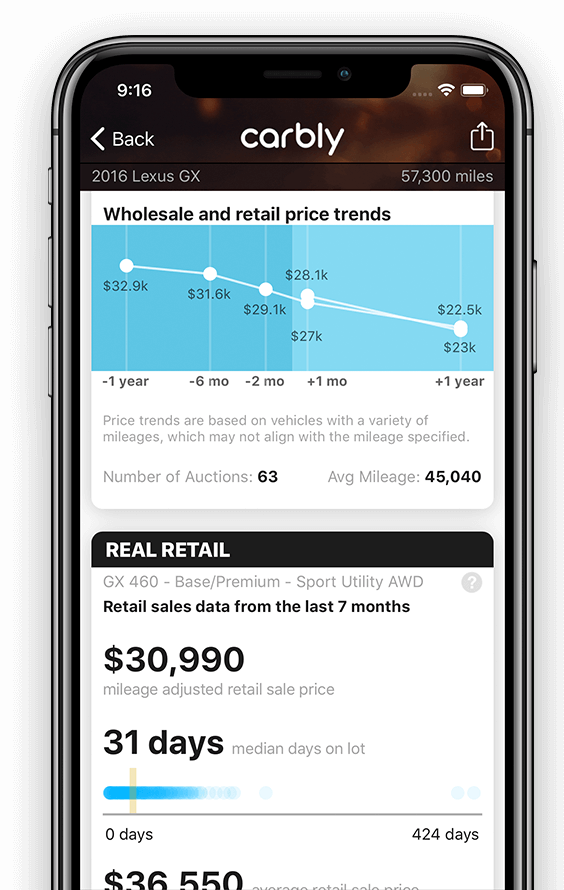
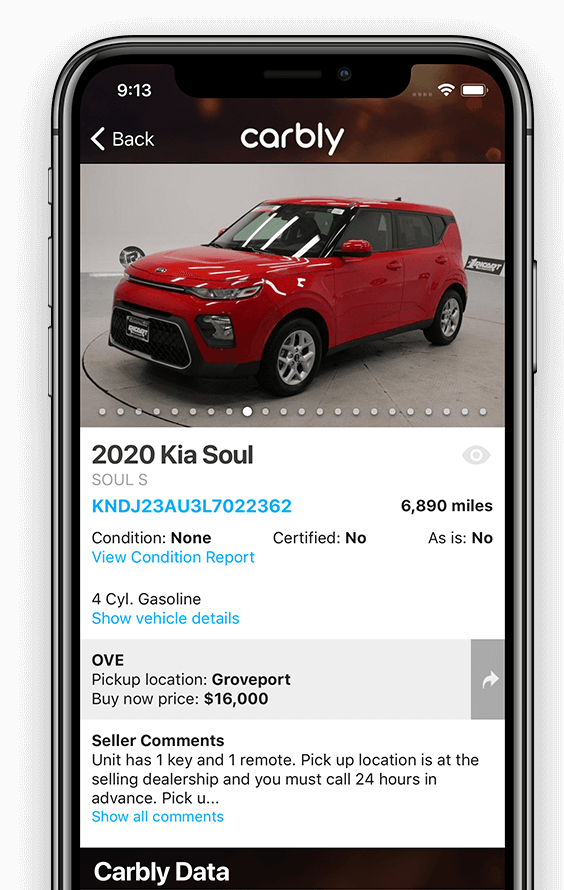
Live Local Market helps dealers see how a vehicle compares against nearby retail listings. Market Tracker adds broader supply and demand context. Lot Sense helps dealers monitor inventory health, pricing risk, and vehicles that need attention before aging turns into lost gross.
That makes the weekly pricing meeting more focused.
Instead of asking, "Which cars should we talk about?" the dealer can start with the units that need a decision.
Instead of guessing whether a price is still right, the dealer can compare the vehicle against the local market.
Instead of waiting for inventory to age, the dealer can act while there is still time to protect gross and turn.
A 20-minute meeting will not solve every inventory problem. But done every week, it can keep small pricing issues from becoming expensive aged-inventory problems.
Start Your Free TrialWant a better way to know which vehicles need a pricing decision? Carbly helps dealers source right, buy right, price right, and manage right with practical market intelligence across the full inventory lifecycle. Start your free 14-day trial.